

The slap came so fast that Elena Morales did not even have time to flinch.
One second, her son was standing in the doorway of the kitchen, his chest rising and falling with the sharp, angry rhythm she had learned to fear. The next, his hand crashed across her face, and the force of it turned her head so violently that she nearly lost her balance against the counter.
For a heartbeat, the whole world went soundless.
The old refrigerator hummed. The ceiling fan clicked in its lazy circle.
Outside, somewhere beyond the grilled windows, a dog barked in the hot darkness of San Nicolás de los Garza. But inside Elena’s body, everything had gone still.
She raised one trembling hand to her cheek.
It was already burning.
Across from her, Diego stood breathing hard, his eyes glassy from alcohol, his jaw clenched so tightly that a muscle twitched at the side of his face. At twenty-three, he was broad-shouldered and handsome in the careless way of young men who do not yet understand how quickly beauty can turn cruel. His black t-shirt clung to his body with sweat. He smelled like beer, cigarette smoke, and the sour remnants of rage.
“I said I need money,” he snapped.
Elena looked at him, and for one terrible second she saw three versions of her son at once: the furious man before her, the sullen boy he had become, and the little child who used to run to her after school with scraped knees and shining eyes.
That child felt dead.
“No,” she said again, softer this time, though not weaker. “I won’t give you any more.”
He stared as if she had betrayed him.
“All my life,” he hissed, “everything in this house has been about surviving because he left.
Because he walked out and left us with nothing. And now you won’t even help me?”
“I have helped you,” Elena said, her voice cracking. “Again and again. I have helped until there is nothing left in me but fear.”
Something flashed across Diego’s face—shame, maybe, or pain—but it vanished too quickly, swallowed by anger.
Then he laughed.
It was not a young man’s laugh. It was hollow, bitter, ugly.
“You’re dramatic,” he muttered.
And he turned away.
That was what destroyed her.
Not the slap.
Not even the insult.
It was the way he walked away as if striking his mother was ordinary, as if the line he had crossed meant nothing at all.
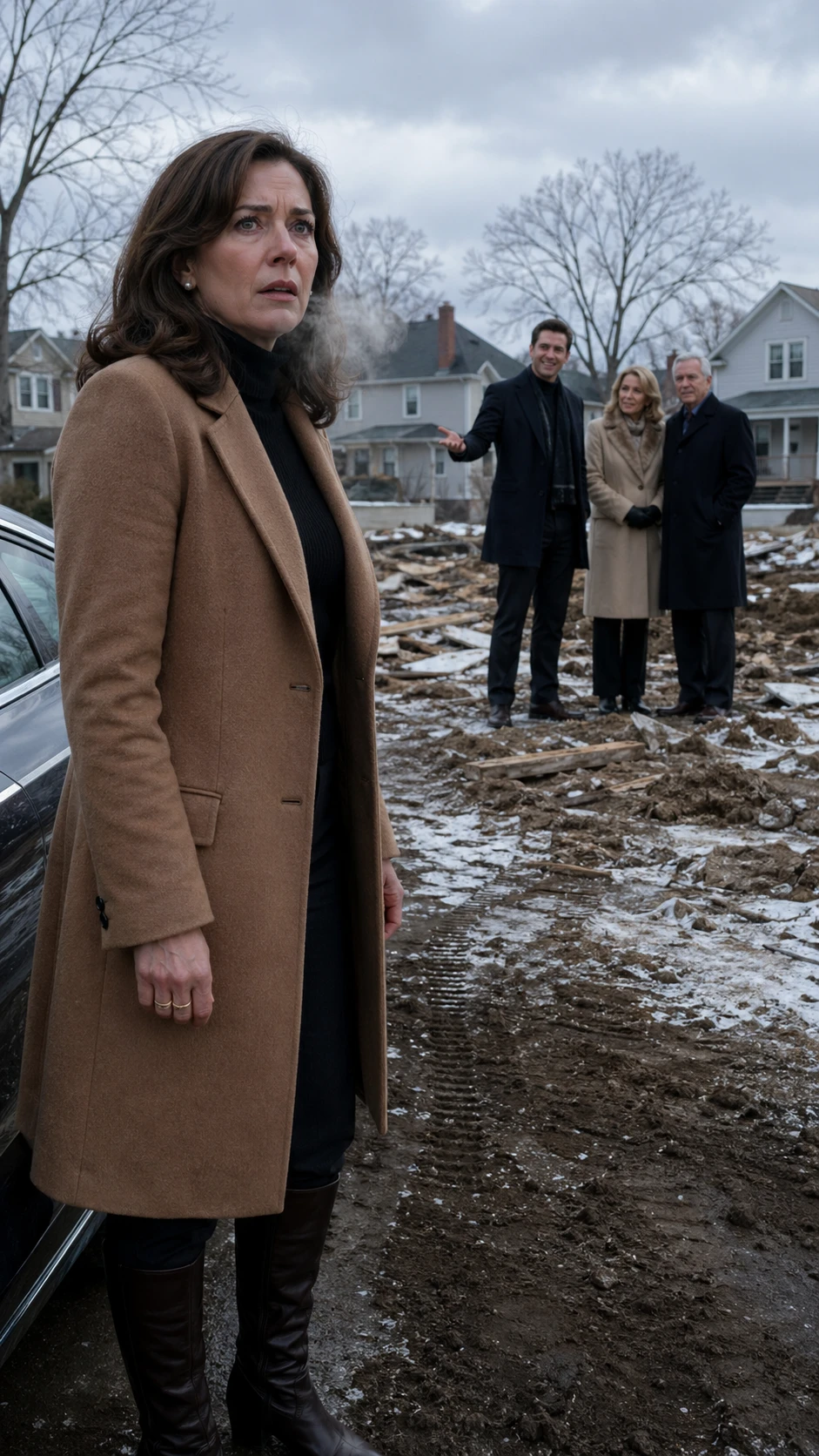
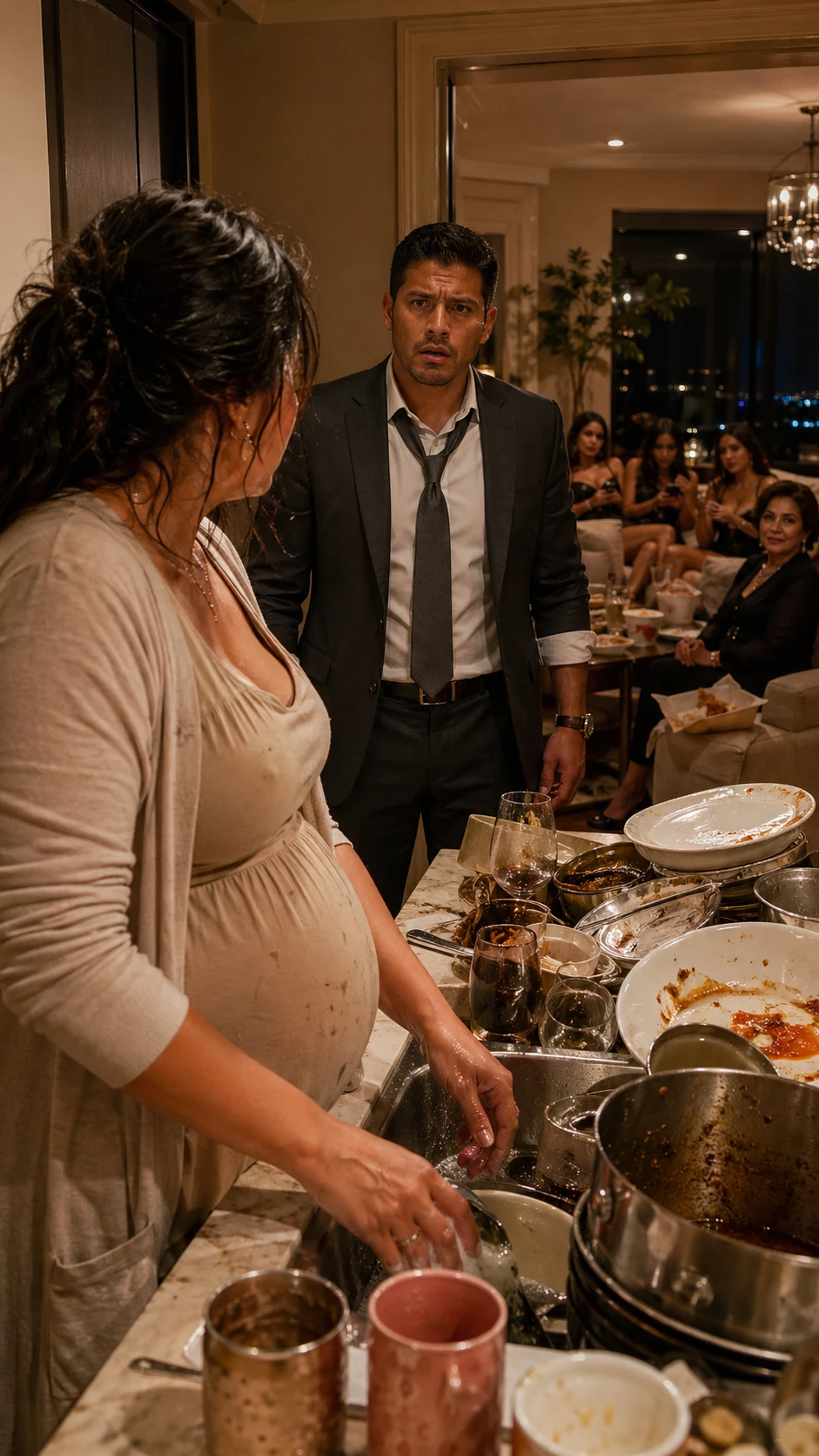

Tonight, for the first time, she understood something with terrible clarity.
If she did nothing, one day her son would destroy both of them.
Later, when the house had gone quiet and the clock glowed 1:20 a.m. in the darkness, Elena sat alone at the kitchen table.
A single bulb above the stove cast a weak yellow pool across the wood. Her cheek had swollen. Her heart still beat too fast. She could hear Diego’s heavy sleep down the hall, careless and untroubled.
She picked up her phone.
For eight years, she had resisted this call. She had imagined it a hundred times and put it off a hundred and one. Pride had stopped her. Hurt had stopped her. The memory of betrayal had stopped her.
Tonight, fear overruled everything.
The line rang twice.
Then a man answered, his voice rough with sleep but instantly alert. “Hello?”
Her throat tightened. “Roberto…”
Silence.
Not confusion. Not distance. Recognition.
“Elena?” he said.
The sound of her name in his voice broke something open in her chest. For a moment she could not speak.
Then the words came out in a whisper so thin she almost didn’t recognize them as her own. “He hit me.”
Another silence.
This one was different.
It was not emptiness. It was pressure. Contained force.
“When?” Roberto asked.
“Tonight.”
“Are you hurt badly?”
“My face. I’m…” She swallowed. “I’m afraid.”
The next words came without hesitation.
“I’m on my way.”
She closed her eyes.
Eight years ago, Roberto Morales had packed two suitcases and left before dawn.
No shouting. No broken glass. No dramatic confession. Just a quiet, brutal departure after twenty-six years of marriage. He had kissed Elena’s forehead while she pretended to be asleep, then driven away to Monterrey with another woman waiting for him there. Later came the apology, the excuses, the offers of money, the claim that he had “fallen out of love.” Elena had hated him with a disciplined, silent fury.
Diego had hated him louder.
At fifteen, their son had watched his father leave and turned that wound into an identity. From then on, every failure belonged to Roberto. Every disappointment traced back to that abandonment. Elena had spent years trying to protect Diego from the damage, never noticing how much of that damage he had begun to cherish.
Roberto arrived just before dawn.
Elena heard the car first, then the knock—two quiet taps at the door, respectful, uncertain.
When she opened it, for a second she forgot how to breathe.
Time had changed him, but not in the ways she expected. His hair was grayer, cut short. His face carried more lines, especially around the mouth. But his eyes were the same: dark, intelligent, steady. He wore a plain white shirt with the sleeves rolled up, as if he had dressed in a hurry and come exactly as he was.
The moment he saw her cheek, every trace of composure vanished.
“Dios mío,” he murmured.
He lifted a hand, then stopped before touching her.
The restraint hurt more than contact would have.
“I’m fine,” Elena said automatically.
“No,” Roberto said quietly. “You are not.”
For a moment they only stood there, two people separated by years and resentment and memory, bound again by the same unbearable child-shaped grief.
Then Roberto stepped inside.
“What do you want to do?” he asked.
Elena looked down the hallway toward Diego’s room.
A hundred answers crossed her mind. Call the police. Wake him up. Throw him out. Scream until the neighbors came running.
Instead she heard herself say, “In the morning, I want him to sit at this table and see what he has become.”
Roberto studied her face, then nodded once.
So at sunrise, Elena began to cook.
She cracked eggs into a bowl. Sliced papaya. Heated bread. Poured coffee. Set out plates and glasses with calm, deliberate hands. The ordinary sounds of breakfast filled the kitchen: the hiss of butter in the pan, the soft clink of ceramic, the scrape of a chair across tile. But beneath every movement lay the hard edge of decision.
Roberto sat at the far end of the table, silent.
He had offered twice to take over, twice to confront Diego immediately, and twice Elena had refused.
“This is my house,” she had said. “He needs to see me standing.”
Roberto accepted that. He always had understood when Elena’s gentleness became iron.
By the time Diego appeared in the hallway, the sunlight had turned thick and gold across the table.
He came in rubbing his eyes, his hair mussed, his face dull with the heaviness of drink. At first he saw only the breakfast and slowed, confusion loosening his shoulders. Then his gaze moved to Elena’s bruised cheek—and finally to the man seated calmly at the end of the table.
He stopped so abruptly the chair beside him scraped.
All color left his face.
For a second, no one spoke.
Then Diego let out a disbelieving laugh. “What is this?”
Roberto did not move. “Sit down.”
Diego looked at Elena. “You called him?”
“Yes.”
“After all these years?” His voice rose. “You called him?”
“I called the only person who might still make you listen.”
Diego stared at her as if she had struck him. “You always do this. You always make me the villain and him the victim.”
Roberto’s expression hardened. “No one here is making you anything. You hit your mother.”
Diego whipped toward him. “Don’t talk to me like you get to be a father now.”
“I’m not asking for the right,” Roberto said, very calm. “I’m telling you what you did.”
Diego’s hands curled into fists. “You left. You destroyed this family. You don’t get to walk back in here and judge me.”
Something flickered in Roberto’s eyes then—not anger, but something deeper. Regret worn so long it had become part of the bones.
“You are right about one thing,” he said. “I left. I failed both of you. I have no defense for that.”
Diego blinked, almost thrown by the absence of argument.
Roberto leaned forward. “But what you did last night is yours. Not mine. Not your mother’s. Yours.”
The words seemed to strike Diego harder than shouting would have. He looked from Roberto to Elena and back again, searching for a softer target, a weakness, an escape.
Instead he found only stillness.
“Elena,” he said sharply, “tell him to leave.”
“No.”
His face twisted. “You’d choose him over me?”
The question hung in the kitchen like poison.
Elena set down the coffee pot with careful precision. Then she faced her son fully.
“For years,” she said, “I chose you every single day. I chose you when you lied to me. I chose you when you stole money from my purse. I chose you when you broke things in this house. I chose you when the neighbors heard you shouting and I told them you were just upset. I chose you when I was afraid.” Her voice trembled, but she did not stop. “And last night, you raised your hand to me. So do not ask me what I choose. Ask yourself what you forced me to stop choosing.”
Diego looked as if the floor had shifted under him.
He took a step back. “I was drunk.”
Roberto let out a quiet breath through his nose. “That is an explanation. It is not an excuse.”
“I didn’t mean—”
“No,” Elena said. “You meant it in the moment. That is enough.”
He opened his mouth again, but now the fight was draining out of him. Shame entered where fury had been, and it made him smaller.
For the first time since walking in, he looked truly young.
“I don’t know how to fix this,” he whispered.
Elena’s eyes filled. She hated herself for still wanting to comfort him. A mother’s love was the cruelest habit she had ever formed.
Before she could answer, Roberto reached into his shirt pocket and placed a folded envelope on the table.
“I do,” he said.
Diego frowned. “What is that?”
“Open it.”
Slowly, suspiciously, Diego pulled the papers free.
His eyes moved across the first page.
Then the second.
Then back to the first.
His expression changed so violently that Elena’s stomach dropped.
“What is this?” Diego asked, but the anger in his voice had been replaced by something far more dangerous: fear.
Roberto held his gaze. “The truth.”
Diego shook his head. “No.”
“Yes.”
Elena stared between them. “What truth?”
Roberto turned to her then, and she saw something in his face that made her blood run cold. Not just guilt. Not just pain.
Confession.
“Elena,” he said quietly, “there is something I should have told you years ago.”
The room seemed to tighten around her.
Roberto looked at Diego, then back at her.
“The woman I left for…” He stopped, swallowed, and forced the rest out. “She worked in the hospital where Diego was born.”
Elena frowned, not understanding.
Roberto’s voice dropped lower. “Three months ago, she died. Before she died, she sent me records. DNA records. Birth files. Letters.” His hand rested on the envelope. “I thought she was trying to punish me. I almost burned them. But I tested it again myself.”
Diego’s breathing went shallow. “Stop.”
Roberto did not stop.
“When you were born,” he said, staring directly at Elena, “there was a switch. A deliberate one.”
The kitchen vanished for Elena. The walls, the table, the sunlight—everything seemed to recede.
“What?” she whispered.
“The child we raised…” Roberto’s voice broke for the first time. “Diego is not biologically ours.”
The words slammed into the room like a physical force.
Diego recoiled as if struck. Elena gripped the edge of the table so hard her knuckles whitened.
“No,” she said. “No. That’s impossible.”
Roberto pushed the papers toward her with shaking fingers. “The woman I left for was involved. She knew. There had been another baby. Another family. Same hour, same hospital. She became obsessed with me years later and told me only after she was dying.” His face crumpled with disgust. “She said she wanted me to live with the same loss she had lived with.”
Diego backed away, knocking into the chair. “You’re lying.”
“I wish I were.”
Elena stared at the pages, but the words blurred. Hospital seals. Dates. Names. A DNA report.
Another name.
Mateo Gabriel Morales.
Her real son.
Alive.
Not dead. Not lost to miscarriage, as the hospital had told her after a supposed “complication” during recovery. Not a medical tragedy. A theft.
She looked up slowly, unable to feel her own body.
“Alive?” she breathed.
Roberto nodded once, tears standing openly in his eyes now. “Alive. He has been alive all this time.”
Silence exploded.
Then Diego made a sound Elena would never forget—not a shout, not a sob, but something torn from the center of a human being.
All the rage that had defined him for years suddenly looked different under this new light. Not smaller. More horrifying.
He wasn’t merely a broken son abandoned by his father.
He was a stolen child, raised inside the wreckage of a lie none of them had known.
Elena looked at him—truly looked at him—and in his shattered face she saw not a monster, not just the man who had hurt her, but the infant who had been handed into her arms by deceit. The boy who had inherited pain that was never his. The young man who had built himself around a wound older than memory.
And yet—
He had still raised his hand to her.
Two truths collided inside her, each unbearable.
Diego sank into the chair, staring at nothing. “Then who am I?”
No one answered.
Because the most devastating part was still waiting in the final page of the envelope.
Elena’s trembling fingers lifted it.
An address.
A recent photograph paper-clipped to the back.
A man in his twenties standing outside a small auto shop in Saltillo, smiling at someone off-camera.
He had Roberto’s eyes.
He had Elena’s mouth.
And next to the photograph, in the neat handwriting of a dead woman, were seven words that turned the air to ice:
He already knows who his real parents are.