

The first slap didn’t hurt nearly as much as the look in my son’s eyes.
That was what broke something in me.
Not the force of his hand. Not the sharp sting exploding across my cheek. Not even the copper taste of blood that flooded my mouth a second later.
The cold, unflinching, almost satisfied hatred in Brandon’s face—as if he had been waiting years for permission to do this, waiting for one tiny excuse to finally lift his hand against the man who had given him everything.
So I counted.
One.
The second blow spun my head to the side. Crystal glasses rattled on the long dining table.
Someone gasped. Amber, his wife, sat in her chair in that champagne-colored dress, one elegant leg crossed over the other, watching me with a smile so small and cruel it barely moved her lips.
Two.
By the tenth slap, my ear was ringing.
By the twentieth, my vision had gone watery around the edges.
By the thirtieth, my lower lip had split wide open, and warm blood ran down my chin onto the collar of my pale blue shirt.
He thought he was humiliating me.
He had no idea he was destroying himself.
My name is Franklin Reeves. I am sixty-eight years old, and for forty years I built roads, bridges, shopping centers, office towers, and half the steel-and-concrete skeletons men now point at proudly from the windows of their luxury condos. I know permits, contracts, setbacks, labor strikes, recessions, betrayal, greed, and the specific sound a weak man makes when he mistakes temporary comfort for permanent control.
And as my son stood in his River Oaks dining room, chest heaving after thirty blows, I realized something with stunning clarity:
I had not raised a king.
I had financed a coward.
I wiped the blood from my mouth with the back of my hand and looked at him.
He was still beautiful in the way entitled people often are—expensive haircut, expensive watch, expensive black shirt with the sleeves rolled to his forearms as if he’d done any real work that day.
At thirty, Brandon had the polished, confident look of a man who believed the world had naturally arranged itself around him.

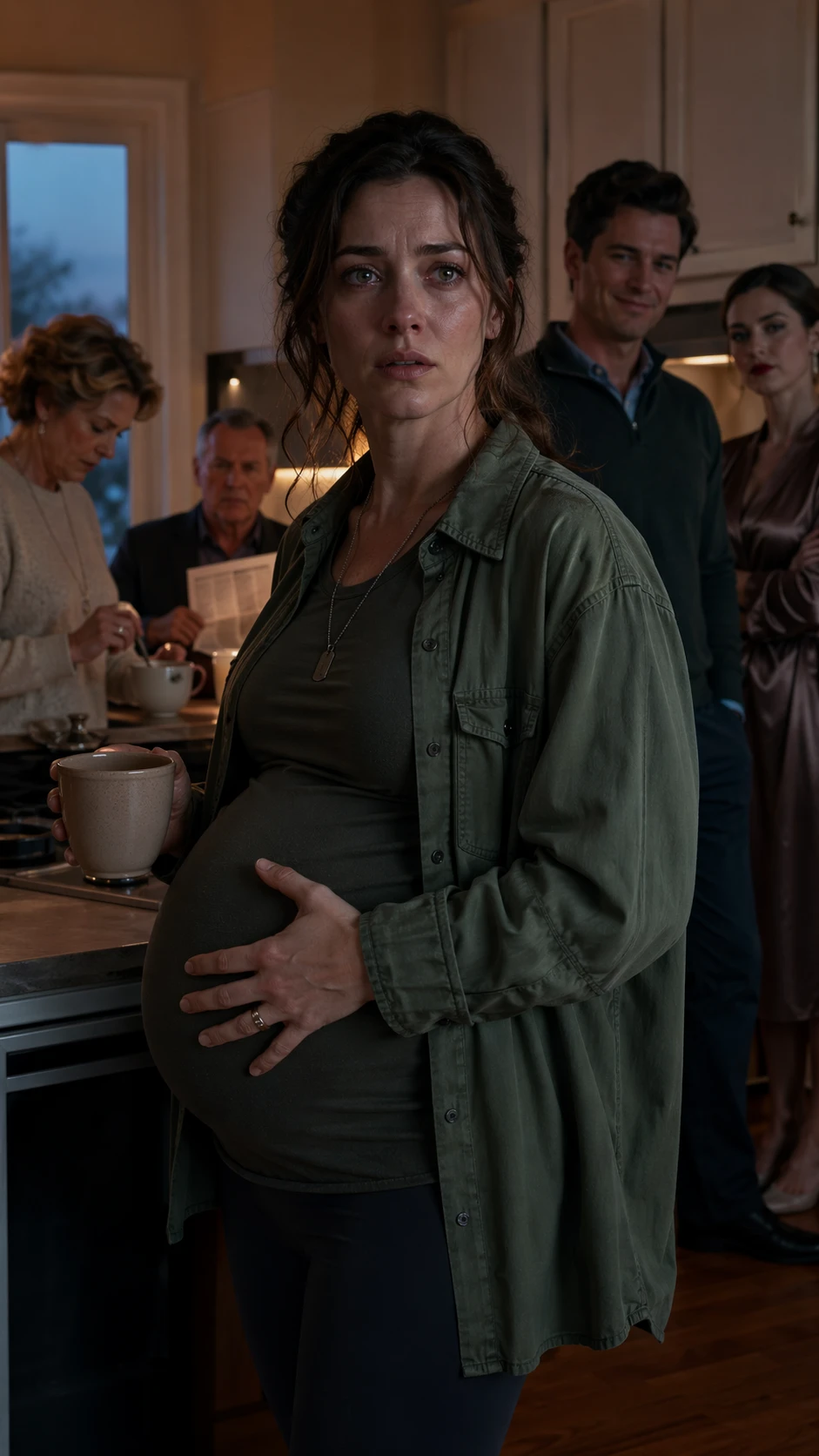
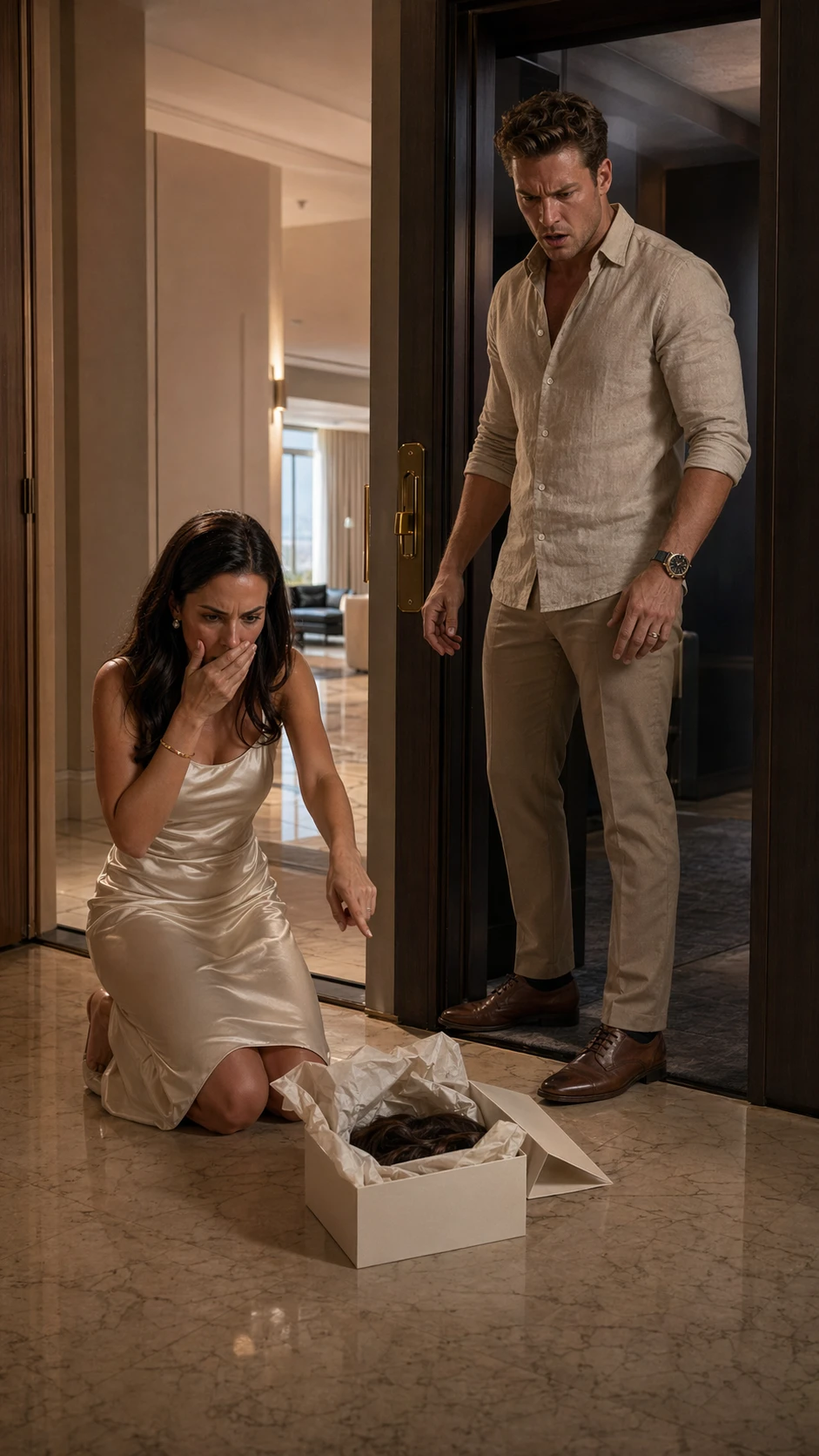
Amber rose from her chair at last, slow and graceful, pretending concern.
“Franklin,” she said softly, “you really should stop provoking him.”
I stared at her.
That voice. That polished silk voice. I had heard it for five years—at Christmas dinners, birthdays, Sunday lunches. Always respectful enough to stay blameless, always sharp enough to draw blood. Amber had never screamed, never cursed, never crossed a line cleanly enough for anyone to call her cruel. But she had spent years turning my son’s impatience into resentment, and his resentment into contempt.
Brandon grabbed the antique watch box I had brought him and tossed it onto the tablecloth as if it were garbage.
“I’m tired of this,” he snapped. “You show up here acting like we owe you something.”
I looked at the watch lying crooked beside a half-empty wineglass. I had spent months restoring it myself.
It was the same model Brandon’s grandfather—my father—had once admired in a store window when we couldn’t afford groceries, let alone watches.
“You live in a house I paid for,” I said quietly. “And you speak to me like I’m the one taking from you.”
His jaw tightened. “This house has nothing to do with you anymore.”
That almost made me laugh.
Because that was where the real story began.
Five years earlier, after I closed the largest commercial land deal of my life, I bought the River Oaks property outright through an LLC called Redwood Capital. I furnished it, renovated it, landscaped the grounds, paid the taxes, and let Brandon and Amber move in after their wedding. I told them it was a gift because, at the time, I thought generosity might do what discipline had failed to do.
But I never transferred the deed.
Not to Brandon.
Not to Amber.
Not to anyone.
Legally, morally, structurally—the house was mine.
I had set it up that way because experience had taught me one brutal truth: people reveal their character most clearly when they think they no longer need you.
And over five years, my son and his wife revealed everything.
The first year, they were grateful.
The second, they were comfortable.
By the third, Brandon had stopped calling unless he needed something. Amber began asking me to “let them know in advance” before I visited, even though every square foot of that marble palace technically belonged to me.
By the fourth year, Brandon introduced me to guests as “my dad, old-school construction guy,” with the kind of smile that translated to: He got lucky, but he’s from another world.
And in the fifth year, he hit me thirty times in front of his friends.
That night, after the last slap, I didn’t threaten him.
I didn’t call the police.
I didn’t scream.
I bent, picked up the brown-paper-wrapped gift I had dropped beside the chair, and walked out of the house I had built for a son who no longer deserved shelter.
The cold hit my face like a wet cloth. I got into my old sedan, shut the door, and sat in the dark with both hands on the wheel while blood dripped onto my cuff.
And for the first time in years, I let myself grieve.
Not for the pain.
For the boy he used to be.
I remembered Brandon at seven years old, sitting on a plywood beam at one of my job sites, swinging his legs and eating a peanut butter sandwich while asking if I really knew how to make buildings stand up. I remembered him at twelve, proudly holding a crooked birdhouse we built in the garage. I remembered him at sixteen, crying into my shoulder after his first heartbreak and asking me if pain ever stopped feeling like the end of the world.
Somewhere between those years and this night, I had lost him.
Or maybe—God help me—he had always been this person, and I had simply been too proud to see it.
At 8:06 the next morning, I called my attorney, Marlowe Kent.
He answered on the second ring. “Franklin?”
“I’m ready,” I said.
He was silent for half a second, then his tone changed. “Did something happen?”
“Yes.”
“Do I need to ask whether this is emotional?”
“No,” I said, staring at my reflection in the kitchen window. My bruised cheek had bloomed into dark purple. “This is overdue.”
At 8:23, I called the property manager for Redwood Capital. At 8:41, Marlowe confirmed the title status. At 9:10, the house was quietly offered to a private buyer who had been chasing River Oaks inventory for months. At 10:32, the buyer agreed to the number without bargaining.
By 11:49, I was sitting in Marlowe’s glass-walled office downtown, signing the final sale documents with a steady hand while Houston shimmered cold and silver behind him.
My phone started vibrating across the table.
Brandon.
I let it ring.
Then again.
Then again.
Marlowe adjusted his glasses and studied me. “You’re certain?”
I signed the last page and slid it back to him. “I was certain at slap number three.”
He almost smiled, then stopped himself. “You never told him?”
“No.”
“About the deed?”
“No.”
“About Redwood Capital?”
“No.”
Marlowe leaned back slowly. “He’s going to lose his mind.”
“Good,” I said.
An hour later, I found out just how accurate that prediction was.
I had just stepped outside the building when Brandon came barreling across the sidewalk from a black SUV, tie loose, face twisted, phone in one hand.
“What did you do?”
People turned.
Traffic hissed past in the street. A February wind tugged at my coat.
I said nothing.
He stopped three feet in front of me, breathless with panic. For the first time in years, he didn’t look arrogant. He looked like a child who had opened the wrong door and found darkness on the other side.
“There were men at the house,” he said. “Some real estate people. A lock company. They said the property was sold. They said—” His voice cracked. “They said we have seventy-two hours.”
Amber was standing by the SUV, pale and furious, no makeup hiding the strain in her face. She marched forward in high heels and pointed a shaking finger at me.
“You can’t do this!”
I turned to her. “I already did.”
Brandon stepped closer. “Dad, stop. Enough. Whatever this is, you made your point.”
I laughed once—quietly, without humor.
“My point?”
His eyes darted over my bruises, and for a fraction of a second, shame flickered there. But only a fraction.
Then self-preservation returned.
“Look,” he said, lowering his voice. “I was angry. I drank too much. Things got out of hand.”
“Thirty times,” I said.
He froze.
“I counted.”
Amber folded her arms. “So what, you’re going to ruin your own son over one terrible night?”
I looked at her for a long moment, then back at Brandon.
“No,” I said. “I’m ruining a man who thought I was too old to defend myself.”
That should have been the end of it.
It would have been enough.
The house gone. Their illusion shattered. Their pride stripped clean in daylight.
But life had one more turn waiting for all of us, and it was so sharp, so brutal, and so impossible that even now, when I think back on that week, it feels less like memory than fate.
Three days after the sale, while Brandon and Amber were still scrambling to move their things into a luxury rental apartment, I received a call from a woman named Teresa Holloway.
I didn’t know the name.
But Brandon did.
Her voice shook. “Mr. Reeves, I’m sorry to bother you. I found your number in old company records. I… I think you need to know something about your son.”
I should have hung up.
Instead, I listened.
By the time she finished, the room had gone very still around me.
Because the worst betrayal had never been the slaps.
Not even close.
Teresa had once worked as an accountant for a subcontracting company Brandon insisted on using for several redevelopment projects I had privately financed through Redwood Capital. On paper, everything was clean. In reality, for the last eighteen months, Brandon had been forging internal approvals, siphoning money through shell vendors, and burying losses under inflated invoices.
Millions.
Not from strangers.
From me.
And Amber had helped.
She had managed the social connections, the introductions, the fake vendors through friends of friends, the polished dinners where everyone smiled and toasted and lied.
I sat in silence after the call, one hand gripping the edge of the desk so hard my knuckles went white.
I had believed the house was the lesson.
It wasn’t.
It was only the opening move.
The next month unfolded like a controlled demolition.
Marlowe brought in forensic accountants. Teresa handed over copies of emails, transaction ledgers, fake contracts, burner phone records. One by one, the walls closed in. Every trail led back to Brandon and Amber. Every lie connected to another lie.
When federal investigators finally got involved, even I was stunned by the scale of it.
Brandon called me dozens of times. Then hundreds.
He cried. He apologized. He begged.
He blamed Amber.
Amber blamed him.
Then they blamed me.
And then, when that didn’t work, they turned on each other so viciously it was like watching two wolves discover there was only enough meat for one.
I saw Brandon one last time before the indictments came down.
He stood across from me in Marlowe’s office, no black shirt now, no swagger, no River Oaks polish. Just a wrinkled suit, hollow eyes, and a face that had aged ten years in six weeks.
“I made mistakes,” he whispered.
“Yes,” I said.
He swallowed hard. “You set me up.”
I almost pitied him.
“No, Brandon. I gave you every chance to become a decent man. You set yourself up.”
Tears filled his eyes. “I’m your son.”
The old grief moved in my chest again, low and aching.
“I know,” I said. “That’s the tragedy.”
He was arrested twelve days later.
Amber disappeared before dawn the morning warrants were issued. For a while there were rumors—Miami, then Madrid, then somewhere in South America. I didn’t care enough to check. Brandon, however, learned the truth from investigators: she had already transferred what money she could into offshore accounts in her name alone.
She hadn’t just betrayed me.
In the end, she betrayed him, too.
That was the part no one saw coming.
Not Brandon.
Not Amber.
Not even me.
Because the final twist wasn’t that I sold the house he thought was his.
It was that the woman he sat beside while I bled—the woman whose smile told him he was right to hate his own father—had never loved him at all.
She had married him for access.
She had helped him steal.
And when the walls began to collapse, she used the chaos to disappear with nearly everything they had left.
Months later, I visited my father’s grave with the restored antique watch in my coat pocket.
The wind moved softly through the cemetery trees. The sky was clean and pale. I stood there for a long time, thinking about inheritance—what we pass down, what we protect, what we fail to teach until it is too late.
Then I took the watch out, looked at it one last time, and set it gently against the headstone.
“Not for him,” I said.
Some losses can’t be repaired.
Some bloodlines break themselves.
And some men only understand value after they lose every last thing they never truly owned.